
CarSole: Car Dashboard
Mor Tosbaa MobilePersonalization
4.429.00 Reviews
- Version
- 18
- Installs
- 50.00K
- Age Rating
- Everyone
Screenshots
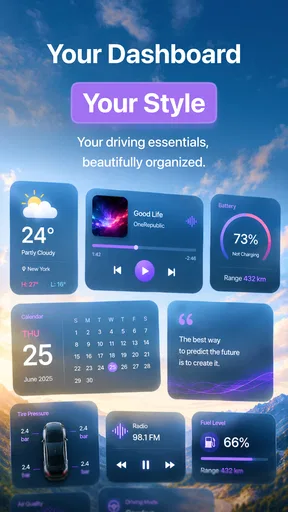
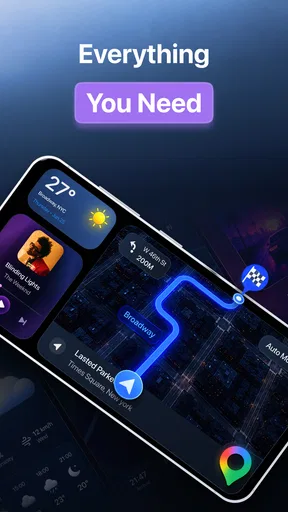
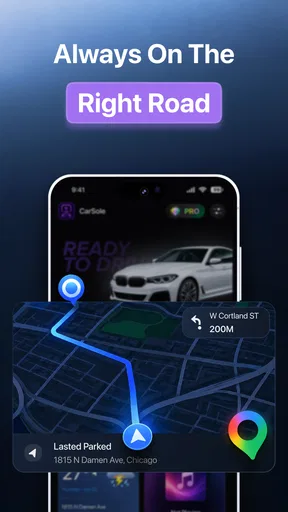
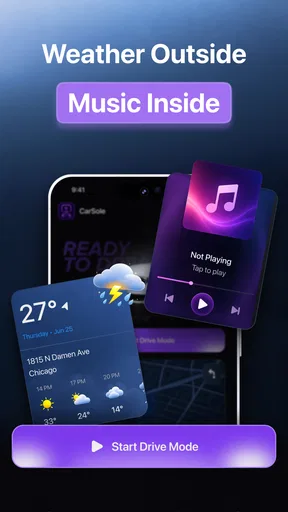
Our Review of CarSole: Car Dashboard
 Analysis by Appyee
I tried CarSole: Car Dashboard with a simple question in mind: is it genuinely useful after the first few drives, or does it only feel interesting because it gives the phone a different look? That is the right way to judge a personalization app built around driving. A dashboard can be attractive on day one, but its lasting value depends on whether it makes everyday media control easier without becoming another distraction or another thing to manage.
My first impression was positive because the app has a clear purpose. It is designed around media playback and audio controls while you are in the car, rather than trying to become a complete replacement for every function on the phone. That narrower focus matters. I found it easier to understand than a general launcher or a collection of unrelated driving tools, and the idea fits short trips, commutes, and moments when I want the phone interface to feel more appropriate for the road.
CarSole belongs to the Personalization category, but I would not judge it like a wallpaper or icon pack. Its value comes from changing the way I interact with audio during a drive. The developer is Mor Tosbaa Mobile, and the app is free to install, with optional purchases ranging from $0.99 to $39.99 per item. That makes it easy to test before deciding whether the experience deserves a permanent place in my routine.
How CarSole feels after the first week
During the first week, the appeal comes from the change in context. A normal phone screen is designed for many situations, while a dashboard-style experience feels more intentional when I am sitting behind the wheel. I liked having a setup that encouraged me to think about playback and audio first instead of opening unrelated apps whenever I picked up the phone at a stop.
The strongest use case is a driver who regularly starts a playlist, pauses an audiobook, changes a podcast, or adjusts listening during a journey. In that situation, a dedicated dashboard concept can reduce the mental effort of searching through a busy phone interface. It does not need to transform the entire car to be useful; it only needs to make the most common media actions feel more direct.
I also found that the app makes more sense when I treat it as part of a routine rather than as a novelty screen. For example, before leaving home, I can prepare the audio I want, open the dashboard, and then keep my attention on the road instead of repeatedly navigating through the phone. The benefit is modest but practical: fewer unnecessary steps can make a familiar commute feel less irritating.
That said, the first-week experience depends heavily on how much control I already have through the car itself. If the vehicle has reliable steering-wheel buttons, a strong built-in media system, or a polished phone integration setup, CarSole has less work to do. In that case, its main contribution is the phone-side presentation and the convenience of keeping related controls together.
For an older vehicle or a basic audio setup, the idea is more compelling. The app gives the phone a role that feels closer to a lightweight in-car companion. I would still avoid treating it as a replacement for proper vehicle controls. A dashboard-style app should support a safe driving routine, not encourage me to browse, search, or make complicated changes while moving.
One useful habit is to separate preparation from operation. I would choose music or spoken audio before starting the journey, then use CarSole only for simple actions once on the road. This is more important than any visual customization because the real test is whether the app helps me interact less, not whether it gives me more things to touch.
Where the first-week novelty helps
The visual shift can make a phone feel more suitable for the car, especially for someone who dislikes the clutter of a standard home screen. The app’s dedicated identity also makes it easier to remember where to go when I want media controls. Instead of opening the phone and deciding which app to use, I can begin from a screen associated with the drive itself.
That small mental shortcut is one of the less obvious strengths. It is not just about appearance. A consistent starting point can help create a repeatable sequence: connect the phone, select audio, open the dashboard, and leave the device alone. The more predictable that sequence becomes, the less likely I am to improvise with the phone once the car is moving.
Another practical advantage is that the app can suit different kinds of journeys. On a short errand, I may only need quick playback control. On a longer trip, the same dashboard approach can serve as a stable place to manage listening without returning to a crowded general-purpose interface. The value is therefore less about one dramatic feature and more about reducing friction in repeated situations.
Still, I would not install it solely because the store summary promises seamless playback and audio controls. That description explains the purpose, but it does not guarantee that every phone, car stereo, or audio service will feel equally smooth. My recommendation is to test it during the type of drive I actually do most often, not during an ideal demonstration.
Whether it earns a place month after month
After the initial excitement fades, the question changes. I no longer care as much about the dashboard look; I care whether I still open it automatically. In my experience, CarSole has a chance of becoming a lasting tool when the user’s driving pattern is repetitive and media-heavy. Daily commuters, delivery workers, and people who listen to spoken audio frequently are more likely to notice its recurring benefit than occasional drivers.
The app is less convincing for someone who rarely listens to audio in the car or already has a dependable built-in interface. Personalization alone may not be enough to justify another layer in the routine. If I only drive once a week and my vehicle handles playback comfortably, the app could quickly become something I installed, admired, and then forgot.
The most sustainable workflow is simple. I would keep the dashboard for starting, pausing, resuming, and making occasional changes, while handling searches, queue building, and account-related tasks before departure. This division protects the app’s strongest purpose. It also prevents the common mistake of turning a focused driving interface into another place to browse.
One trade-off becomes clearer over time: convenience depends on consistency. If I switch between several audio apps, change car connections often, or use different phones, the experience may feel less central. A dashboard earns recurring value when it becomes the same doorway every time. It is not as compelling if I treat it as an occasional visual theme.
I would also judge it by how quickly I can return to normal listening after an interruption. Real drives include calls, navigation instructions, parking, fuel stops, and passengers asking for changes. A useful dashboard should fit around those interruptions rather than force me to rebuild the session each time. CarSole’s concept is strongest when it keeps the media side of the trip easy to resume.
There is a subtle benefit for people who want to reduce phone temptation. A purpose-built starting screen can act as a boundary. When I open it, I have a reason to be there. That does not make the phone automatically safe, but it can discourage drifting into unrelated notifications or social apps. The result depends on personal discipline, yet the focused context supports a better habit than a typical home screen does.
The app’s current version is 18, and it supports devices running Android 7.0 or later. That broad compatibility makes it relevant to people who keep an older phone in the car, although compatibility with the operating system is only one part of the experience. The age of the phone, its screen, its connection behavior, and the car stereo can all affect how pleasant a dashboard feels in daily use.
CarSole is rated for Everyone, which fits its straightforward category and intended audience. I would still explain the driving context carefully to younger users: the rating describes general content suitability, not permission to interact with a phone while driving. The safest long-term use is hands-off as much as possible, with setup completed before moving.
The maintenance that decides its value
Maintenance is not necessarily difficult, but it is easy to overlook. Any app used around a car has to fit into a routine involving charging, audio connections, phone placement, and the driver’s preferred controls. I would keep the phone positioned securely, prepare media in advance, and avoid making the dashboard responsible for tasks better handled by the car’s own controls.
It is also worth checking the app after major changes to the phone or vehicle setup. A new audio service, a different connection method, or a system update can alter the way media behaves. I would not assume that a dashboard app can solve every connection problem. Its role is to provide a useful interface, not to replace the underlying phone and car relationship.
The optional purchases deserve a practical look as well. Since the app is free to try and offers items from $0.99 to $39.99, I would use the free experience long enough to test a normal week before paying for anything. The right question is not whether a paid option looks appealing on the first day, but whether it removes a recurring annoyance that I actually encounter.
For me, a purchase would need to improve a repeated workflow rather than simply add novelty. If the free setup already handles the actions I use most, paying more would not automatically create better long-term value. On the other hand, someone who uses the app every day may reasonably consider an optional item if it makes the dashboard more comfortable to live with.
A good maintenance habit is to keep the dashboard intentionally minimal. The more elements I try to manage at once, the more likely the app becomes visually busy and less useful while driving. I would prioritize the audio actions I use repeatedly and ignore anything that encourages experimentation during a journey. This is a personal workflow tip, but it is central to whether the app remains practical.
What can cause fatigue over time
The main source of fatigue is repetition without a clear payoff. A dashboard can feel fresh for several days simply because it looks different. If it does not save time or reduce distraction after that period, the novelty wears off. That is why I would judge CarSole by the number of unnecessary phone interactions it removes, not by how impressive the first launch feels.
Another possible frustration is the gap between a phone-based dashboard and a true in-car system. A phone screen remains a phone screen. It may sit in an awkward position, compete with navigation, or require more attention than physical controls. If my vehicle already offers excellent media management, I would probably prefer those controls for everyday use and keep CarSole as an optional companion rather than the center of the experience.
There is also a risk of overusing the interface. The app is intended to make audio control convenient, but convenience can tempt me to make changes too often. Skipping tracks, searching for something new, or adjusting a queue can become a distraction even when the interface is clean. My rule would be to use it for decisions made before the drive and for only the simplest changes afterward.
Users who expect a complete navigation, communication, and vehicle-management system should be cautious. CarSole’s identity is focused on media playback and audio control. Someone looking for a full replacement for a car’s infotainment system may be happier with the manufacturer’s software or a broader phone integration solution. The narrower scope is a strength for focused use, but a limitation for anyone wanting one app to handle everything.
People who frequently change listening services may also find the routine less satisfying than users who stay with one familiar setup. A specialized dashboard is easiest to appreciate when I know what I want to play and can start quickly. If most of my drive is spent discovering new content, the app may not remove enough effort to justify becoming a daily habit.
Screen size and placement matter more than I expected. A dashboard concept works best when its controls are easy to recognize at a glance, but I would not compensate for a poor mounting position by staring longer. If the phone is too low, too far away, or affected by glare, the correct solution is to improve the physical setup or rely on the car’s controls, not to keep interacting with the display.
One of the more useful trade-offs is that simplicity can be both the app’s advantage and its ceiling. Because the idea is focused, it can avoid the clutter of a general phone interface. But that same focus means it may not offer enough value for users who want extensive customization, detailed vehicle information, or a broad collection of driving tools. I would choose it for a clean media routine, not for maximum functionality.
My long-term verdict on CarSole
CarSole: Car Dashboard earns lasting space when it becomes part of a disciplined driving habit. I can recommend it to someone who wants a dedicated place for media playback and audio controls, especially if the car itself has limited support or the phone interface feels inconvenient. The free entry point makes the decision easy: install it, test it during ordinary journeys, and see whether it genuinely reduces repeated interaction.
I would not recommend it as an automatic upgrade for every driver. If the vehicle already provides excellent controls, if audio is only an occasional part of the trip, or if the user wants a complete infotainment replacement, another option may be a better fit. The app’s focused design is not a weakness by itself, but it does mean the right audience is narrower than the broad idea of “driving app” suggests.
Its strongest long-term advantage is the possibility of turning a messy phone routine into a predictable one. Prepare the audio before leaving, use the dashboard for straightforward control, and keep the phone from becoming the center of attention. That workflow gives the app recurring value without asking it to do more than it is designed to do.
The biggest limitation is that the experience cannot be separated from the car, phone, and driver. A polished interface will not fix an inconvenient mount, unreliable audio connection, or habit of browsing while moving. CarSole works best as one part of a sensible setup, not as a promise that software alone can make every drive effortless.
With an average rating of 4.4 from around 6 thousand ratings and more than 50 thousand installs, it has already attracted a meaningful group of users. Those figures suggest enough interest to take seriously, but my own recommendation is more practical than numerical: keep it if it becomes the quickest safe route to the audio actions you repeat, and remove it if the dashboard never becomes part of your normal departure routine.
Overall, I see CarSole as a focused personalization app with a useful everyday angle rather than a flashy one-time experiment. Its value grows through repetition, preparation, and restraint. If it helps me touch the phone less while keeping media control familiar, it has earned its place; if it only changes the appearance of the drive, the novelty will not last.
Verdict
Strengths of CarSole: Car Dashboard
- Turns an Android device into a simple, glanceable car dashboard.
- Large speed and navigation elements are easy to read while parked or driving.
- Useful shortcuts for music, calls, maps, and other driving tools.
- Customizable dashboard layout helps match different vehicle setups.
- Can be a practical low-cost alternative to dedicated dashboard hardware.
Limitations of CarSole: Car Dashboard
- Phone brightness and screen size may be insufficient in direct sunlight.
- Some features may depend on compatible GPS, Bluetooth, or vehicle hardware.
- Battery use can be high during long drives with GPS and the screen active.
- Mounting the phone securely is necessary for safe and comfortable use.
- App performance may vary across devices and Android versions.
Other Releases by Mor Tosbaa Mobile
View All
Radar GO-X: HUD, GPS, Maps
Auto & Vehicles4.1

Collector’s Helper - Coin Lens
Finance4.2
Similar Picks in This Category
View All
Microsoft SwiftKey AI Keyboard
SwiftKey4.3

Wallpapers
Google LLC4.1

Zedge™ Wallpapers & Ringtones
Zedge4.7

Yandex Browser with Alice AI
Direct Cursus Computer Systems Trading LLC4.3

Ringtone Maker:create ringtone
Big Bang Inc.4.7

Fonts Keyboard
Fonts Keyboard3.9
Frequently Asked Questions
What is CarSole: Car Dashboard, and what does it do?
CarSole: Car Dashboard is designed to turn an Android device into a simplified in-car dashboard interface. It can provide quick access to commonly used driving tools, such as navigation, music, phone functions, and other shortcuts, depending on the device and installed apps. Its main purpose is to make essential controls easier to reach while driving, with a cleaner layout than a standard phone home screen.
Can CarSole: Car Dashboard be used safely while driving?
CarSole may help reduce distractions by organizing important functions in one dashboard, but it does not make phone use completely safe while driving. Drivers should set up navigation, music, and other options before moving, use voice controls where available, and follow local traffic laws. Avoid typing, browsing, or manually operating the phone whenever the vehicle is in motion.
Does CarSole: Car Dashboard work with navigation and music applications?
The app is intended to provide convenient access to compatible navigation, audio, and communication applications installed on your device. However, the exact experience can vary according to your Android version, default app settings, permissions, and the applications you use. Some services may require their own accounts, an internet connection, or additional configuration before they work correctly from the dashboard.
What permissions does CarSole: Car Dashboard require?
Depending on the features enabled, CarSole may request permissions related to displaying content, launching other applications, accessing phone functions, location services, notifications, or audio controls. These permissions should be reviewed carefully during setup. Only grant access that is necessary for the features you plan to use, and remember that denying certain permissions may limit shortcuts or prevent some dashboard functions from operating properly.
Is CarSole: Car Dashboard free, and are there any limitations?
CarSole: Car Dashboard may be available as a free download, but the features, advertisements, optional purchases, and usage limitations can depend on the current version distributed through the app store. Before installing, check the official listing for pricing and subscription details. Also verify device compatibility, because screen size, Android version, vehicle connectivity, and installed companion apps can affect the overall experience.
